Sisyphus vs Claude Code: Which AI Coding Agent Should You Use in 2026?
Compare Sisyphus (Oh My OpenCode) and Claude Code. Features, pricing, model flexibility, and performance differences to help you choose the right AI coding assistant.
Sisyphus vs Claude Code: Which AI Coding Agent Should You Use in 2026?
The AI Coding Agent Landscape
The AI coding assistant market has evolved from simple autocomplete tools to sophisticated agent frameworks. Two prominent contenders have emerged: Claude Code (Anthropic's official CLI) and Sisyphus (the Oh My OpenCode framework). While both aim to accelerate software development, they take fundamentally different approaches.
This comparison examines architecture, features, cost efficiency, and real-world performance to help you make an informed decision.
"If Claude Code does in 7 days what a human does in 3 months, Sisyphus does it in 1 hour. It just works until the task is done. It is a discipline agent." — Sisyphus Labs Community Member
Overview Comparison
| Feature | Claude Code | Sisyphus (Oh My OpenCode) |
|---|---|---|
| Developer | Anthropic | Yeongyu Kim (Community) |
| Model Lock-in | Claude only | Multi-model (Claude, Gemini, GLM, etc.) |
| Pricing | Anthropic subscription | Your API keys / Free options |
| Agent Architecture | Built-in sub-agents | Configurable multi-agent system |
| Customization | Limited | Highly customizable |
| Open Source | No | Yes |
| Context Window | Up to 200k | Model-dependent (up to 1M+) |
Architecture Deep Dive
Claude Code Architecture
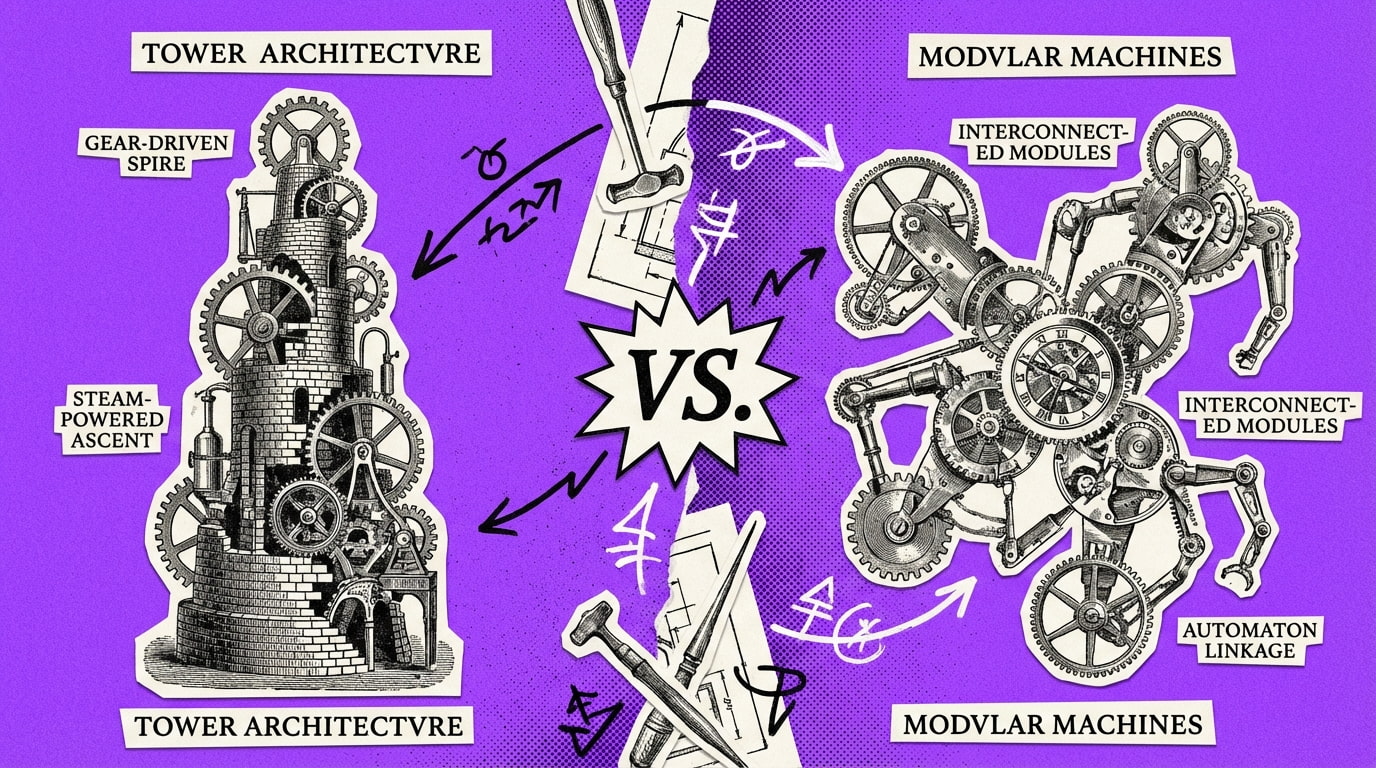
Claude Code operates as an integrated experience tied to Anthropic's infrastructure:
- Single Provider: All operations use Claude models
- Built-in Sub-agents: Plan, Explore, and Task agents pre-configured
- Managed Experience: Anthropic handles optimization and updates
- Consistent Behavior: Same experience across all users
The sub-agent system in Claude Code includes:
- Planner: Designs implementation strategies
- Explorer: Searches and understands codebases
- Task Runner: Executes specific operations
Sisyphus Architecture
Sisyphus takes a modular, provider-agnostic approach:
- Multi-Model Support: Mix Claude, Gemini, GLM, OpenAI, and more
- Configurable Agents: Choose which model powers each agent
- Community-Driven: Open source with active development
- Plugin Ecosystem: Extends functionality via MCP servers
The Sisyphus agent hierarchy:
- Sisyphus (Orchestrator): Main coordinator
- Oracle: Complex decision consultation
- Librarian: Codebase knowledge management
- Explore: Dependency and structure mapping
- Document Writer: Documentation generation
- Frontend UI/UX Engineer: Interface specialization
- Multimodal Looker: Image and visual processing
Feature Comparison
Model Flexibility
Claude Code: Limited to Claude models (Opus, Sonnet, Haiku). You use what Anthropic provides based on your subscription tier.
Sisyphus: Complete freedom. Use Claude Opus for planning, free GLM for exploration, Gemini for documentation—all in the same session. This flexibility enables significant cost optimization.
// Sisyphus mixed-model configuration (premium)
{
  "agents": {
    "Sisyphus": { "model": "anthropic/claude-opus-4-5" },
    "librarian": { "model": "opencode/glm-4.7-free" },
    "explore": { "model": "google/gemini-3-flash" }
  }
}
Here's a real budget configuration shared by a community member running without any Claude subscription:
// Zero-Claude budget config (actual community setup)
{
  "agents": {
    "Sisyphus": { "model": "opencode/glm-4.7-free" },
    "librarian": { "model": "opencode/glm-4.7-free" },
    "explore": { "model": "google/antigravity-gemini-3-flash" },
    "frontend-ui-ux-engineer": { "model": "google/antigravity-gemini-3-pro-high" },
    "document-writer": { "model": "google/antigravity-gemini-3-flash" },
    "multimodal-looker": { "model": "google/antigravity-gemini-3-flash" }
  }
}
Winner: Sisyphus (flexibility) / Claude Code (simplicity)
Model Performance Insights from Community Testing
Community members have discovered model-specific strengths worth noting:
| Model | Best For | Watch Out For |
|---|---|---|
| GLM 4.7 (Free) | Plans, first drafts, exploration | Struggles with debug cycles—gets stuck in loops |
| Grok Fast | Speed-sensitive tasks | Less battle-tested |
| MiniMax M2.1 | Integration testing, debugging | Newer option |
| Claude Opus | Complex reasoning, fast iteration | Cost, rate limits |
| Codex 5.2 | Complicated multi-step problems | Slower than Opus |
"GLM 4.7 is really good at generating plans and first drafts, but NOT good at run→debug→run→debug cycles to fix complex CI/CD pipeline issues." — @rockersrod, community tester
Refactoring Capabilities
Claude Code: Standard code modifications with built-in safety checks and Edit tool.
Sisyphus: Dedicated /refactor command (v2.13.1+) that operates like a human engineer:
- Codebase Understanding First: Launches parallel explore agents to map dependencies, usage patterns, and architectural boundaries
- Deterministic Planning: Creates detailed refactoring plans based on comprehensive understanding
- Verification by Design: Designs verification strategy before any changes—identifies test coverage and rollback points
- Surgical Execution: Uses LSP tools and AST-grep for precise, type-safe transformations
/refactor "reconstruct AuthService as multiple services, after consulting with Oracle"
"From simple variable renaming to full-scale architecture restructuring—the kind of refactoring that was once the exclusive domain of human programmers—Sisyphus now handles with the same care and precision." — YeonGyu Kim, creator
Winner: Sisyphus
Persistent Task Execution
Claude Code: Tasks exist within conversation context. Extended operations may lose continuity during context compaction.
Sisyphus: The /ralph command (Ralph loop) enables persistent task execution that survives context compression:
/ralph "implement the complete user authentication system with tests"
Winner: Sisyphus
Background Processing
Claude Code: Background agents available but managed by Anthropic's system.
Sisyphus: Configurable background agent queue with customizable concurrency:
/background "research authentication patterns" --concurrency 5
Winner: Tie (different approaches)
Token Consumption
Claude Code: Optimized prompts but you're locked into Claude pricing. Community reports indicate higher per-task token usage due to built-in "funky stuff" in the system prompt.
Sisyphus: v2.14.0 (January 2026) specifically optimized for token efficiency:
- Librarian switched to GLM 4.7 (free) by default
- Librarian uses conditional searches (not mandatory)
- Sub-agents configurable to use free/cheap models
- Background tasks now queued with concurrency limits (default: 5)
- Exa websearch MCP restored
Winner: Sisyphus (cost efficiency)
Setup Complexity
Claude Code:
npm install -g @anthropic-ai/claude-code
claude-code
Simple, works immediately with Anthropic account.
Sisyphus:
bunx oh-my-opencode
# Configure models, API keys, agents...
More setup, but unlocks customization.
Winner: Claude Code (ease of use)
Platform Considerations (Windows Users)
Windows developers take note: Community members report image paste doesn't work in PowerShell with Sisyphus (though it works in Claude Code). Solutions:
- WezTerm: Use
Ctrl+Vfor images,Ctrl+Shift+Vfor text - WSL: Recommended for better overall dev experience
"I use WezTerm on Windows. Ctrl+V to paste images, Ctrl+Shift+V to paste text." — @seelosc
The community consensus: WSL provides a smoother experience, but WezTerm solves the immediate image paste issue without migration.
Documentation and Support
Claude Code: Official Anthropic documentation, enterprise support available, consistent updates.
Sisyphus: Sisyphus Labs Community Discord (active), GitHub issues, community-contributed guides. Fast iteration but less formal support structure.
Winner: Claude Code (enterprise) / Sisyphus (community responsiveness)
Cost Analysis

Claude Code Pricing
- Pro Plan: ~$20/month with 5-hour usage windows
- Enterprise: Custom pricing
- API: Pay-per-token at Anthropic rates
Typical monthly cost for active developer: $20-100+
Sisyphus Pricing
- Framework: Free (open source)
- Models: Your choice
- Free: GLM 4.7, limited Gemini
- Budget: ~$5-20/month mixed models
- Premium: $20-50/month with Opus usage
With strategic model assignment, Sisyphus users report 60-80% cost reduction compared to Claude Code while maintaining quality for core tasks.
The Antigravity Reality Check (January 2026)
Recent community reports indicate Antigravity has significantly reduced Claude Opus rate limits. Users are hitting limits much faster than before:
"I hit it quick last night. Just checked Reddit and everyone complaining about it." — Community member, Jan 8, 2026
This changes the cost equation. Some Sisyphus users now consider Claude Code subscriptions as backup:
"Guess I have to buy a Claude Code subscription now."
Impact: The 10x cost advantage of Antigravity over Claude Code Max may no longer hold. Factor this into your decision if Opus access is critical to your workflow.
Performance Benchmarks
Based on community discussions and real-world usage:
| Task Type | Claude Code | Sisyphus | Notes |
|---|---|---|---|
| Simple edits | Fast | Fast | Comparable |
| Large refactors | Good | Excellent | Sisyphus /refactor shines |
| Codebase exploration | Good | Good | Model-dependent |
| Multi-file changes | Good | Excellent | Better orchestration |
| Documentation | Good | Good | Gemini often preferred |
| Long-running tasks | Moderate | Excellent | Ralph loop advantage |
When to Choose Claude Code
Choose Claude Code if you:
- Want zero configuration—it should "just work"
- Prefer official support and documentation
- Don't mind vendor lock-in to Anthropic
- Work in enterprise environments requiring formal support
- Value consistency over customization
- Already have an Anthropic subscription
When to Choose Sisyphus
Choose Sisyphus if you:
- Want model flexibility to optimize costs
- Need persistent task execution (Ralph loop)
- Prefer open-source, community-driven tools
- Want advanced refactoring capabilities
- Already use multiple AI providers
- Enjoy customizing your development environment
- Are cost-conscious but quality-focused
Migration Considerations
From Claude Code to Sisyphus
- Install Oh My OpenCode alongside Claude Code
- Start with Claude-only configuration to maintain familiarity
- Gradually introduce cheaper models for sub-agents
- Customize agent behavior as you learn the system
From Sisyphus to Claude Code
- Expect less customization
- Configure Anthropic subscription
- Adjust workflow for single-provider constraints
- Leverage official documentation
The Verdict
Claude Code excels as a polished, enterprise-ready solution with minimal setup. It's the Apple approach—integrated, consistent, premium.
Sisyphus wins for power users who want control over their AI coding stack. It's the Android/Linux approach—flexible, customizable, community-driven.
For most developers exploring AI coding assistants:
- Start with Sisyphus if you're cost-conscious or already use multiple AI providers
- Start with Claude Code if you want the simplest possible setup and don't mind the cost
Many developers use both—Claude Code for quick tasks, Sisyphus for complex projects requiring persistent execution and cost optimization.
Join the Sisyphus Community
Want to learn more about Sisyphus and connect with other developers? Join the active community on Discord:
→ Join Sisyphus Labs Community on DiscordHunt
Get help with setup, share configurations, discuss model strategies, and stay updated on the latest features.